60 Years Supporting Reliable Research: How Have Things Changed, and What Will the Future Hold?
In 1966, PHCbi launched its first pharmaceutical refrigerator model. In the 60 years since, scientific research environments have changed dramatically.
Laboratories have grown more complex, more regulated, and more technologically sophisticated. Workflows that were once relatively simple and manual today depend on precision engineering, advanced monitoring, and tightly controlled conditions.
As PHC marks its 60th year supporting life science research, we spoke to Joe La Porte on how laboratory environments have changed over the past six decades, and what the next generation of research could hold.
Since PHC started 60 years ago, what do you think are the most significant shifts in laboratory environments and scientific workflows?
JLP: A few things really stand out here.
First, temperature uniformity requirements. Today, with products like biologics, cell therapies, and advanced vaccines, the room for variation is a lot smaller because the materials are far more sensitive.
Second is the use of predictive analytics. With the rising costs of reagents and materials stored in cold-chain products and incubators, if something fails, it can result in a major financial loss. To better protect their investment,
labs are turning more and more to predictive tools that flag if something’s drifting or wearing out before it becomes a real problem.
Thirdly, automation. A lot of processes that used to be manual are now integrated into automated workflows, changing how equipment fits into laboratory operations.
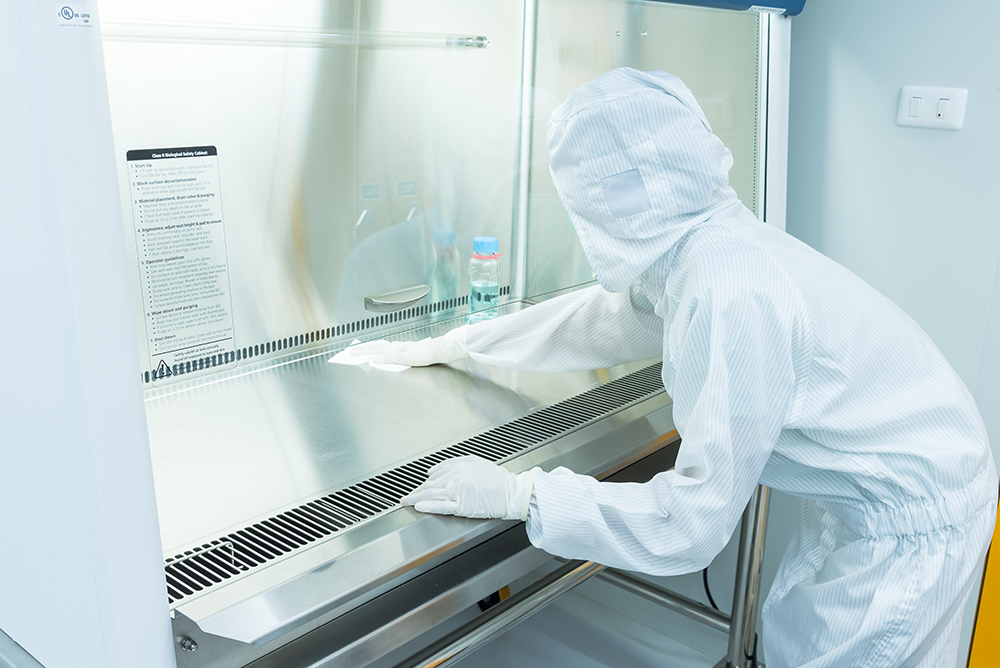
And finally, contamination control. With new products like mRNA vaccines and regenerative medicine, where they are reintroduced back into the body, the environment has to be extremely sterile to ensure safety. Cleanroom compatibility and sterility are now part of the conversation in a way they weren’t decades ago.
What are the biggest challenges today’s labs face that were not as prominent even 10 or 20 years ago?
JLP: The complexity of newer equipment is actually one of the key challenges. Modern equipment can do far more than it used to, but those new capabilities come with a steeper learning curve. Years ago, you might have set a temperature and monitored a couple of alarm points. Now you’re dealing with advanced controls, predictive features, access management, and integration with automation systems.
That shift has real consequences. Training takes longer, and the margin for user error can increase if systems aren’t fully understood. Facilities teams now need broader technical knowledge, more than just pure mechanical expertise.
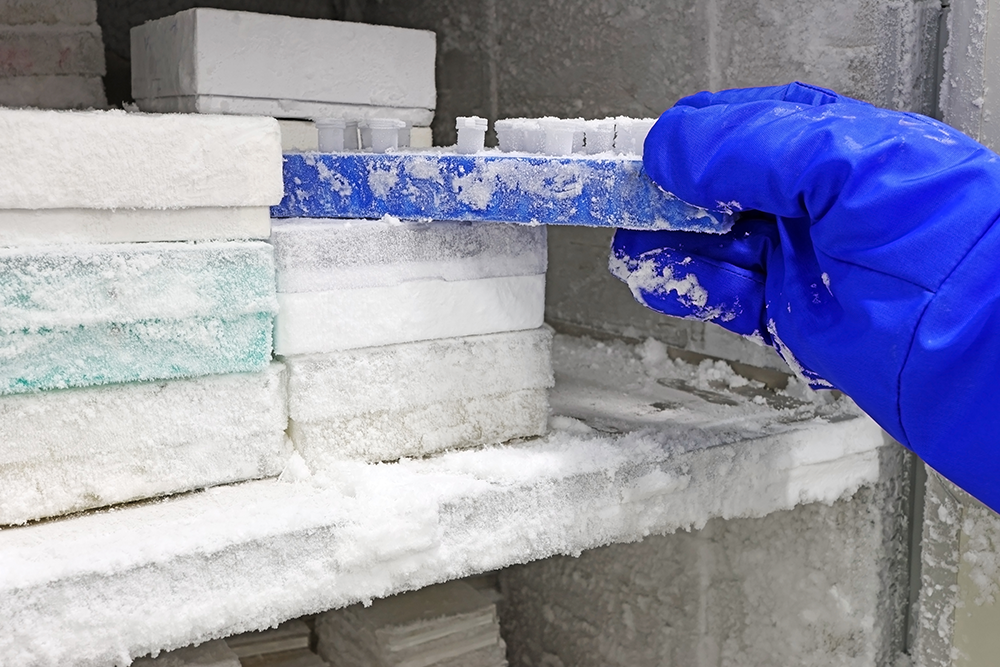
Another challenge is increasing regulatory scrutiny. We’re seeing more products that require -80°C storage, and labs have to demonstrate to the FDA that they’re maintaining those requirements. Storage conditions have to be thoroughly documented, traceable, and defensible during an audit.
Increasing regulations also mean there are additional consequences for equipment downtime. If equipment goes down, in many cases, it must go through internal qualification or recertification processes to demonstrate it still meets the required specifications before being returned to service. That adds time, cost, and operational disruption.
 Stricter sterility requirements
 present another challenge. As I mentioned, mRNA vaccines and regenerative medicines demand tight containment control, which means the use of cleanrooms is increasing. Equipment in cleanrooms has to function reliably without generating particles or compromising the controlled environment. And if something does go wrong, servicing it isn't simple. Entering a cleanroom requires strict protocols, and repairs can be highly disruptive.
Overall, operating a lab today is more technically demanding, more scrutinized, with greater consequences for failure than there was even a decade or two ago.
How have these challenges and demands reshaped what scientists need from their lab equipment and systems?
 JLP:
JLP: I think it's
changed how scientists think about risk when it comes to their equipment. With the more complex workflows, the consequences of failure are bigger. The materials being stored in cold chain and incubation environments are often expensive and difficult to replace.
If something goes wrong, you’re not just losing a sample; you could be losing years of work or a significant financial investment. Because of that, reliability has become non-negotiable. Labs are assessing it more critically and, in a market where bold claims are common, are looking for real-world, peer-reviewed evidence to substantiate performance claims.
The rising cost of materials has also changed how equipment is used. For example, in incubation, more labs are using hyperstacks for cell culture, which are heavier and place greater demands on shelf strength and level stability in incubators. Even small flexes in shelving can change how media sits within the vessel, which affects cell culture growth, and, as media use is being reduced and conserved, this raises the risk of evaporation, making humidity control more important. Incubators now need to deliver tighter environmental consistency and structural reliability than in the past.
There’s also a growing need for visibility. With the increased use of cleanrooms — where unplanned downtime carries much higher operational and financial consequences — and with materials becoming more sensitive and costly, labs want equipment with better tools to anticipate problems before they lead to failure.
Based on PHC’s experience supporting researchers for six decades, what do you think the ‘next generation’ of labs will look like?
JLP: I think we’ll see increasing automation, not just for manpower, but for error reduction. The more repetitive processes you can automate, the lower the chance of error, and the more efficient labs can become. Lab equipment will need to be able to integrate seamlessly into those automated workflows.
We'll also see intelligence built more directly into equipment. Monitoring won’t be something added on after installation; sensors will be embedded during the build process, tracking multiple internal data points to give better predictions of equipment health and support earlier, more informed decision-making. With the rising use of cleanrooms, that capability will become more essential.
Looking ahead, the labs of the future will likely be more automated, more connected, and more data-driven than ever before. But, ultimately, the core requirement of lab equipment won’t change. Researchers need reliable systems that protect the integrity of their work and allow them to focus on scientific discovery. After 60 years, that principle is as relevant as ever.
Backed by 60 years of experience, explore how PHCbi's laboratory solutions can support your current and future research.
Find out more.
Joe LaPorte
Chief Innovation Officer
Joe LaPorte has been the Chief Innovation Officer at PHC Corporation of North America since 2022. He has over 30 years of international experience in cold chain management and ultra-low-temperature refrigeration and deep expertise in engineering and product development.
A dedicated member of the PHC Corporation of North America for 28 years, LaPorte has played a pivotal role in advancing the company’s cold storage technologies and laboratory equipment innovations. He has served on the ENERGY STAR stakeholder committee for lab-grade products and currently serves as a voting member on the NSF committee that defined the American National Standard for vaccine storage.