PHC Group’s Current Governance:
From Building Frameworks to Enhancing Effectiveness
- Toru Yoshimitsu
- Audit and Supervisory Board Member
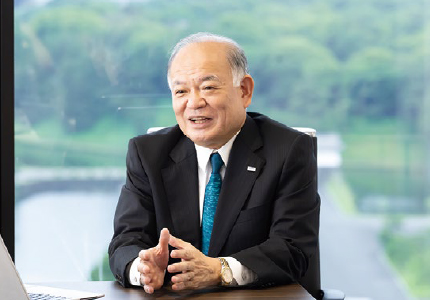
In June 2025, Mr. Toru Yoshimitsu, who brings extensive external experience, assumed the position of Full-time Audit and Supervisory Board member of PHC Holdings Corporation. What does PHC Group’s current governance structure look like through the eyes of someone with no prior connection with the Group? Now, one year after his appointment and with a deeper understanding of the organization, he shared his views on the Group's current state from an external perspective, as well as the challenges that remain in further strengthening governance.
Expectation and Understanding Before Appointment
Before assuming the position of Audit and Supervisory Board member of PHC Holdings Corporation in 2025, I studied the company’s governance structures based on its Integrated Reports, securities reports, and other materials. The composition, independence, and skill matrices of the Board of Directors and Audit and Supervisory Board as well as the voluntary Nomination and Compensation Committee were appropriately designed, and my impression was that the Group had built a solid structure within the relatively short period since its public listing in 2021.*
Conducting effective audits as an Audit and Supervisory Board member, however, requires more than well-designed systems and structures. It is necessary to access all information and make accurate determinations regarding potential risks and opportunities. From my perspective as an appointee from outside the Group, I initially wondered whether I would be able to make accurate determinations regarding the Group’s risks and opportunities in a short period of time.
I also regarded the level of borrowings and repayment plans, their relationship to future business growth, and how the multiple businesses formed through M&A would generate synergies in practice as important points to examine.
- *The company’s shares were listed on the First Section (now the Prime Market) of the Tokyo Stock Exchange on October 14, 2021 (securities code: 6523).
Open Information Sharing and the Effectiveness of Management Controls
Since my appointment, my impressions have changed in a positive way. One reason is that the management team, including the CxOs, are extremely open. As an Audit and Supervisory Board member, I naturally conduct site visits and interviews, but the management side also reaches out and invites me to participate in meetings. I have also been fortunate to participate in roundtable discussions to interact directly with personnel on the junior, mid-career, and veteran levels.
At times, I hear unfiltered opinions from employees that include uncertainty. What has made a greater impression on me is seeing new employees who have accumulated small successes actively discussing them with enthusiasm to pass on their experiences to others. Hearing the opinions and comments of employees from up close makes me feel strongly that the Group attracts people who are eager to make change and take action on their own initiative.
Prior to assuming my role, I was mindful of the need for access to the information necessary to fulfill my supervisory responsibilities. In practice, I have found myself in an environment where I can fully engage with the information needed. While some information may require additional time to obtain due to differences in systems and processes across the Group, management and employees have consistently responded openly. This culture of transparency has been a significant support in fulfilling my responsibilities.
There was something that surprised me about management control after I took office. One of the Group’s deliberative bodies, the monthly performance review meeting confirms the results, future outlook, and risks and opportunities of each business unit on a monthly basis. It also sets targets for and manages working capital to ensure that cash circulates appropriately. I feel that the fact that these matters are examined in such detail is an indication of management’s commitment to pursue the implementation of its policies, rather than letting them be just words.
Regarding the level of borrowings and repayment plans, which was a point of interest to me before I took office, I believe that repayment plans should not be viewed in isolation. Rather, they should be examined along with cash generated from operating activities, excess funds that can be allocated to investment, and the outlook for future business growth. In this sense, I have come to see the monthly confirmation of each business’s status, outlook, risks, and opportunities through the Performance Review Conference and the emphasis placed on cash management as a key management control mechanism for continuously monitoring the Group’s financial position.
Some issues that should be examined more deeply in the future include the synergies among the multiple businesses that have been formed through M&A and business integration. Looking across the Group, I also see opportunities to deepen the value created through the combination of multiple businesses acquired and integrated over time. As the Group continues to evolve, further alignment in areas such as talent management frameworks, organizational grading structures, and investment evaluation methodologies would further enhance decision-making and resource allocation. To translate synergy into tangible value, it is important not only to evaluate each business independently, but also to establish a common foundation that enables management to compare alternatives and make resource allocation decisions from a Group-wide perspective. I believe this will be a key consideration in further strengthening our portfolio management going forward.
Collaboration among the Board of Directors, Audit and Supervisory Board, and Internal Audit
Considering that PHC Group has an Audit and Supervisory Board, the Board of Directors operates as a management board that deliberates and adopts resolutions on key agenda items. I feel that the way that agenda items are selected is appropriate. For particularly important matters, rather than proceeding directly to a resolution, information is shared from an early stage in the form of a reporting item and the matter is discussed more deeply in stages ultimately leading to a resolution.
The Board of Directors also includes members with diverse backgrounds and business experience, as well as expertise in areas such as law, finance, and accounting, enabling discussions from a wide range of perspectives. It is my impression that during the Board’s deliberations, questions are raised about points that fundamentally need to be confirmed in order to pass a resolution about the matter in question. Regarding risk identification, the legal function, which serves as the secretariat for the Board, identifies potential risks before agenda items are submitted, consults external experts as necessary, and shares this information with Board members.
Audit and Supervisory Board members have no voting rights at Board of Directors meetings, yet the Group has an atmosphere where I can express my opinions without hesitation. The external Audit and Supervisory Board members express opinions based on their respective areas of expertise, for instance, as a certified public accountant or an attorney. As a full-time Audit and Supervisory Board member, I participate in deliberations based on information that I obtain from within the Group and share that information with the external members. In the past year, there have been instances where points raised by an Audit and Supervisory Board member led to additional or follow-up deliberation, which shows that all voices are welcome.
In one case, considering the Companies Act, I believed that a comprehensive policy and process should be established. When I pointed this out to the executive team, it was added as a new agenda item. In another example involving follow-up deliberation, the matter concerned the balance between cost and risk/benefit. A proposal was made to reduce costs from the previous fiscal year, but I noticed that risks arising from matters outside the scope of responses had been increasing recently, so I expressed my opinion to the Board of Directors. As a result, the matter was set for follow-up deliberation. I see this as an indicator that an Audit and Supervisory Board member’s opinion helped deepen discussion by the Board of Directors.
Within the operations of the Audit and Supervisory Board, it is important that the full-time members serve as an information hub. I hold one-on-one meetings with the CxOs every month, record the information and insights gained in reports, and share those insights with the external members. At Audit and Supervisory Board meetings, I also share agenda items and the details of discussions at Group Executive Committee meetings. Board of Directors meeting agenda items are in principle discussed at the Group Executive Committee before being referred to the Board, and sharing this information with Audit and Supervisory Board members is also meaningful as a kind of advance briefing on Board of Directors meeting agenda items.
This kind of information sharing is also important for raising the quality of discussions at Audit and Supervisory Board meetings. The members operate under an independent authority system, but sharing information on risks and how to assess them, including perceptions of risk levels and specific items, enhances the effectiveness of audits by the Audit and Supervisory Board.
In the relationship with internal audit departments, Audit and Supervisory Board members do not have the authority to direct or issue orders to internal audit departments and do not have any authority regarding personnel evaluations, but in practice, we work in close collaboration. At the stage of formulating audit plans, we share knowledge with each other, and during the fiscal year, whenever an internal audit report is issued, we align our understanding of the findings and the effectiveness of remedial measures. There are cases where the audit items overlap, but I believe that the important point is not to mechanically eliminate the overlap. Audit and Supervisory Board members and internal audit departments each have distinct roles. It is precisely for this reason that it is important to coordinate the perspectives from which audits are conducted, leading to effective and efficient audits overall.
Building Foundations to Support Growth Investment and Global Expansion
Looking to the future, one issue that I consider particularly important to resolve is improving business portfolio management in preparation for the next stage of growth. The Group is currently in the stage of solidifying its foundations, including structural reform, in preparation for future growth. Considering that business growth leads to improved corporate value, it is important to set rules and establish evaluation criteria for appropriately determining which businesses and projects the Group will allocate limited management resources to.
For example, certain evaluation rules are needed to compare investments in efficiency improvements that are expected to yield short-term earnings improvements with medium- to long-term growth investments requiring three to five years of development costs on an equal footing. Also, to make maximum use of human resource assets throughout the Group, it is necessary to consider the extent to which personnel systems and approaches to job grades, which differ from company to company, should be standardized. It is important for the Group to have highly effective and unified rules and structures to support business growth so that the entire Group can move in the same direction. Such rules and structures will serve as a foundation enabling businesses formed through M&A to function in a more integrated manner as a Group and generate synergies. However, the Audit and Supervisory Board members themselves cannot create such rules. What we do is closely monitor whether rules are properly established and enforced and speak up firmly if we believe that something is amiss. I hope that by doing this, we are able to guide the Group as a whole in a positive direction.
Global governance will be a key area in the future. We have conducted on-site visits, including visits to global subsidiaries, to confirm governance, compliance, and systems for ensuring adherence to laws and regulations at each location. Going forward, in addition to these visits, I believe that it will be important to confirm from the perspective of global headquarters whether internal control systems are appropriately established and operated for each function throughout the Group. Instead of just looking at locations individually, it is necessary to confirm whether controls are functioning effectively across the Group as a whole.
Working Toward Governance That Can Adapt to Change
Over the course of the past year, my views on the concerns and confirmation points that I had before taking office have gradually changed. I have gained a strong sense that a culture of open information sharing is at the foundation of audits. And with respect to mechanisms for priority management of cash and monthly confirmation of the status of each business, I feel that mechanisms are operating effectively. I see the creation of synergies among multiple businesses and global governance as matters whose effectiveness should be enhanced even further in the future.
Governance does not have a fixed and completed form. I believe that optimal governance will change with the times. I think that the ideal status is one where a culture and environment exist that allow us to steer in the necessary direction and take action when necessary by asking questions about what should be done in the near term and what should be prioritized looking further into the future. To do this, the Group needs to develop a culture where employees have open mindsets and can engage in free and active discussion, and management creates that type of culture while establishing flexible governance structures. I believe that this is the vision for governance we should seek. The Audit and Supervisory Board will also seek to identify priority themes in response to changes in the business environment and management challenges, support the development of such a culture and foundation, and contribute to strengthening governance and ensuring its effectiveness in ways that support the enhancement of PHC Group’s corporate value.